
Interstellar Comet 3I/ATLAS Spewing Water Like a "Cosmic Fire Hydrant"
In a historic first, astronomers have detected clear signs of water gushing from an interstellar comet, revealing that the building blocks of life exist in planetary systems far beyond our own solar system.
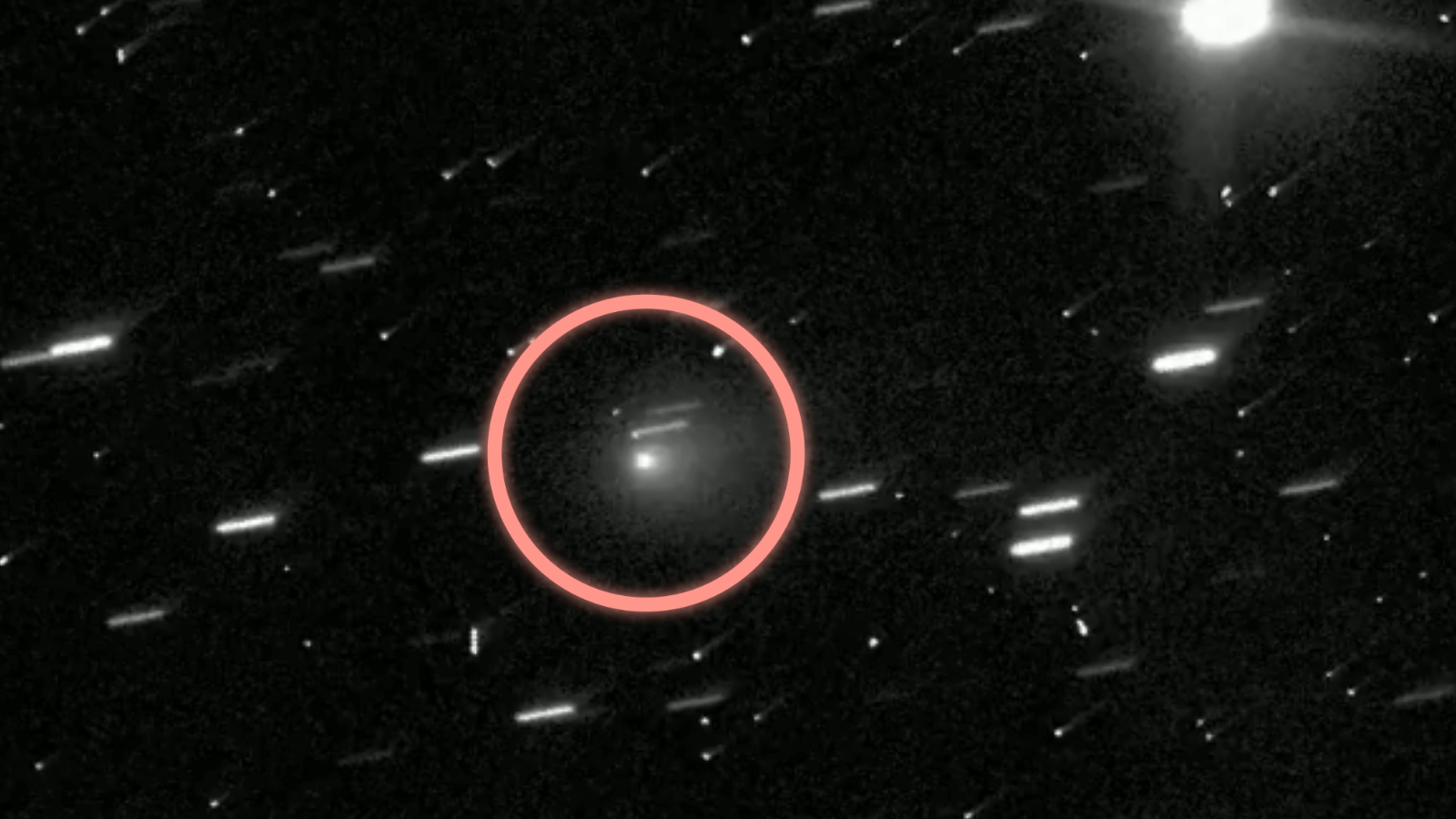
First Clear Water Detection from an Interstellar Visitor
Using NASA's Neil Gehrels Swift Observatory, a team led by Auburn University researchers has made a groundbreaking discovery: interstellar comet 3I/ATLAS is leaking water at an extraordinary rate of approximately 40 kilograms per second—equivalent to a "fire hose running at full blast," according to the research team.
Published in The Astrophysical Journal Letters on September 30, 2025, this study marks the first time scientists have detected the chemical fingerprint of water from an object originating beyond our solar system. The observations were made in July and August 2025, when the comet was still 2.9 astronomical units (AU) from the Sun—well beyond the typical distance where water ice usually vaporizes.
Key Discovery
"When we detect water—or even its faint ultraviolet echo, OH—from an interstellar comet, we're reading a note from another planetary system," said co-author Dennis Bodewits, professor of physics at Auburn University.
"It tells us that the ingredients for life's chemistry are not unique to our own."
Unprecedented Activity Levels
The Swift telescope detected the faint ultraviolet glow of hydroxyl (OH)—the molecular fragment produced when sunlight breaks apart water molecules. To capture this delicate signal, astronomers combined more than two hours of ultraviolet observations and 40 minutes of visible light data, stacking dozens of three-minute exposures.
What shocked researchers was the extent of the comet's activity. Based on the water outflow rate, the team estimates that at least 8% of 3I/ATLAS's surface is actively releasing material—a surprisingly large fraction compared to the 3-5% typically seen in comets native to our solar system.
Water Loss Rate
Equivalent to a fire hose at full blast, detected from 2.9 AU
Active Surface
Nearly double the typical 3-5% seen in solar system comets
The "Icy Debris Cloud" Mechanism
The high level of water activity at such a great distance from the Sun has led researchers to propose a novel mechanism. Rather than water sublimating directly from the comet's frozen surface, the team believes the water vapor comes from chunks of ice floating in the coma—the cloud of gas and dust surrounding the nucleus.
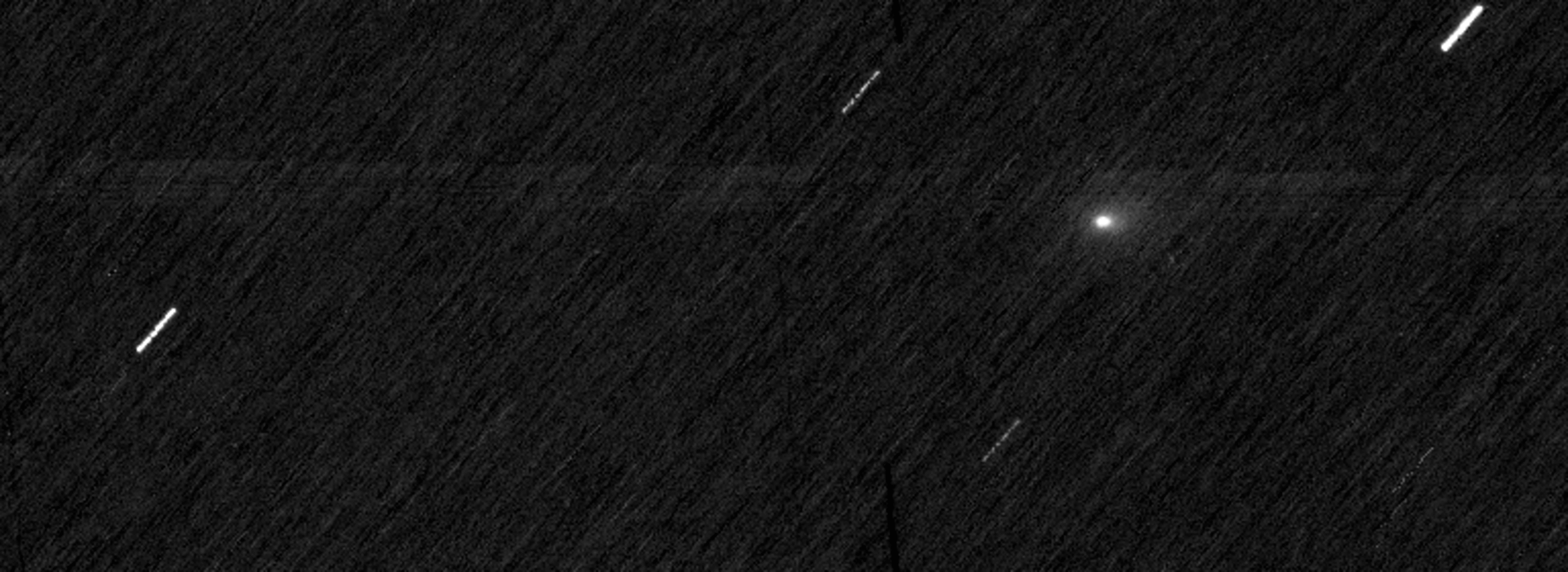
Near-infrared observations from Gemini South and NASA's Infrared Telescope Facility support this theory, revealing hints of ice chunks drifting in the coma. Once exposed to sunlight, these fragments warm up and release water vapor—acting like miniature steam vents in space—even though the main nucleus remains too cold for its surface ice to sublimate directly.
Rewriting Interstellar Comet Science
"Every interstellar comet so far has been a surprise," said Zexi Xing, a postdoctoral researcher at Auburn University who led the study. "'Oumuamua was dry, Borisov was rich in carbon monoxide, and now ATLAS is giving up water at a distance where we didn't expect it."
"Each one is rewriting what we thought we knew about how planets and comets form around stars."
Comparing Interstellar Visitors
1I/'Oumuamua (2017)
Remarkably dry with no detected coma or tail; unusual elongated shape sparked intense debate about its nature
2I/Borisov (2019)
Rich in carbon monoxide with composition more similar to comets from the outer solar system
3I/ATLAS (2025)
Exceptional water production from unprecedented distance, indicating unique ice distribution or structure
Media Response and Scientific Impact
The discovery has generated widespread coverage across major scientific publications and news outlets. WIRED magazine highlighted how the finding challenges our understanding of alien star systems, while Live Science emphasized that the discovery is "rewriting what we thought we knew" about planetary formation beyond our solar system.
The timing of the announcement—coming just days after ESA's Mars orbiters captured unprecedented close-up images of the comet—has created a perfect storm of scientific interest. Multiple spacecraft observations from different vantage points are providing a comprehensive picture of this remarkable interstellar visitor.
Recent Coverage Highlights
- October 8: ABC News, NBC News, Smithsonian Magazine report on Mars orbiter observations
- October 9: The Guardian explores what the comet can teach us about distant planetary systems
- October 10: Space.com details the "fire hose" water discovery
- October 14: WIRED analyzes implications for understanding alien star systems
Implications for Astrobiology
The detection of water from an interstellar comet has profound implications for our understanding of how the building blocks of life are distributed throughout the galaxy. Water is considered essential for life as we know it, and finding it in an object from another star system confirms that the chemical ingredients necessary for life exist far beyond our solar neighborhood.
"This discovery tells us that water—and potentially other organic compounds—are common features of planetary systems throughout the Milky Way," explained Dr. Bodewits. "The chemical processes that create the conditions for life may be universal phenomena."
Continued Observations
Since making these observations in July and August, 3I/ATLAS has continued its journey toward perihelion (closest approach to the Sun) on October 29, 2025. The comet has since faded from Swift's view due to its position relative to the Sun, but was spotted again in early October by ESA's Mars orbiters as it passed about 30 million kilometers from the Red Planet.
ESA plans to continue following the interstellar visitor with additional observations from its Jupiter Icy Moons Explorer (JUICE) spacecraft in November 2025. JUICE will observe the comet just after its closest approach to the Sun, when it's expected to be at its most active. However, because JUICE is currently positioned on the far side of the Sun and using a slower backup antenna, scientists don't expect to receive its comet observations until February 2026.
Upcoming Milestones
Looking Ahead
The water detection from 3I/ATLAS represents a watershed moment in our understanding of interstellar objects and the broader cosmos. As the comet approaches perihelion and intensifies its activity, scientists worldwide will be watching closely for additional surprises.
With each interstellar visitor proving dramatically different from the last, the field of interstellar comet science remains wide open. The next visitor could reveal entirely new phenomena, continuing to challenge and expand our understanding of how planetary systems form and evolve across the galaxy.