3I/ATLAS

C/2025 N1 · Third Interstellar Visitor

A hyperbolic comet traveling at extraordinary speeds through space.

Discovery

July 1, 2025

ATLAS Survey, Chile

Perihelion

Oct 29, 2025

1.357 AU from Sun

Closest to Earth

Dec 19, 2025

1.80 AU (269 million km)

Latest Updates

Breaking news, mission updates, and fresh observations

View All News
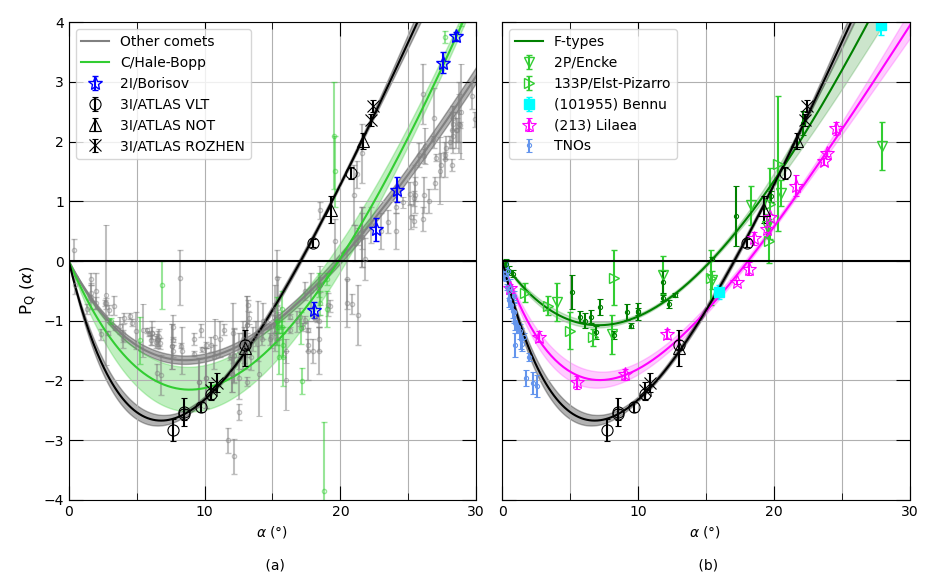
3I/ATLAS negative polarization BREAKTHROUGH NEW

3I/ATLAS Exhibits Unprecedented Negative Polarization Unlike Any Known Comet

First polarimetric observations reveal -2.7% negative polarization, suggesting dust formed under conditions absent from our Solar System

Read more
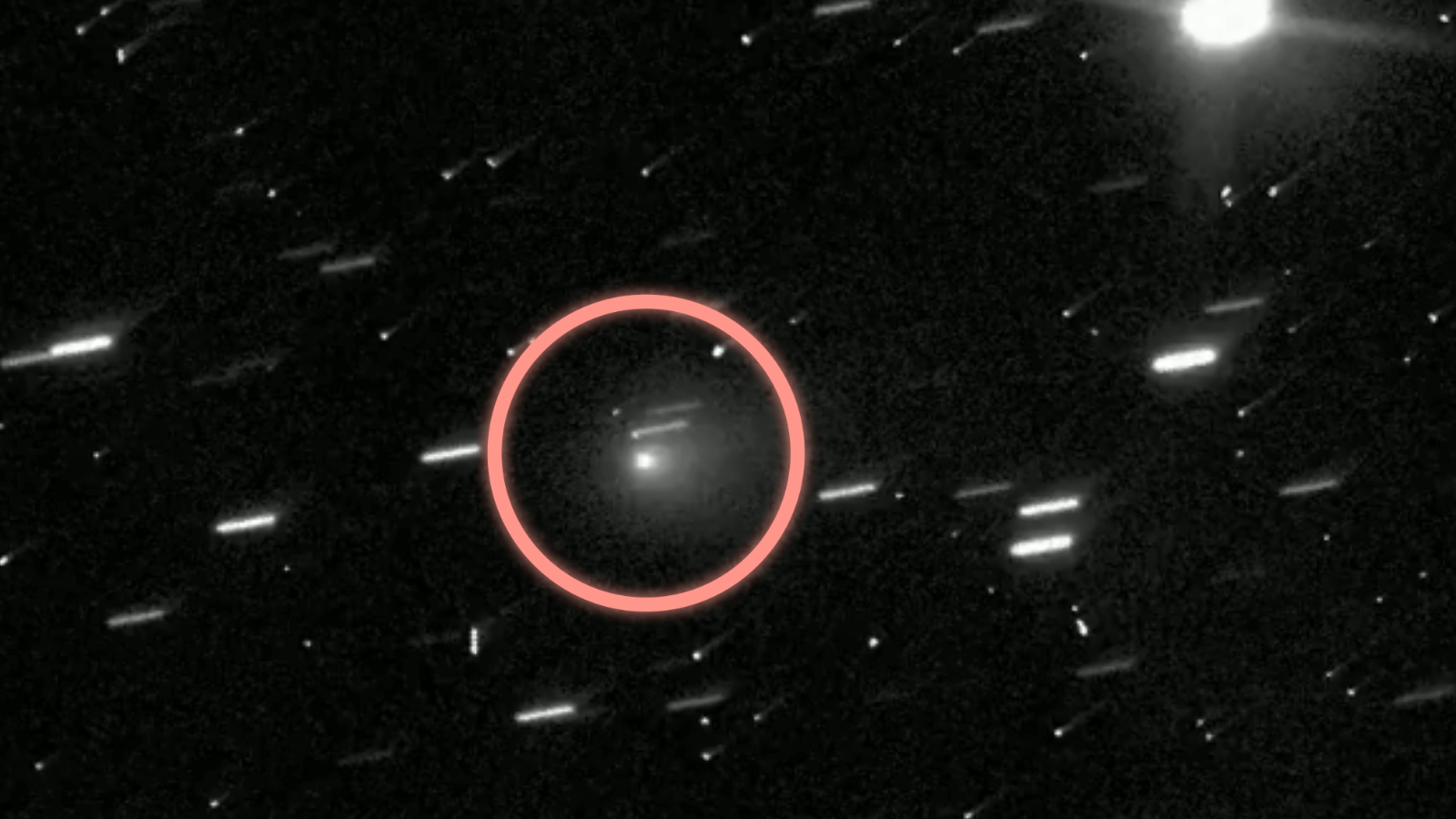
3I/ATLAS perihelion and solar conjunction mission

3I/ATLAS Reaches Perihelion Behind the Sun as Historic Mission Encounters Loom

Interstellar comet reaches perihelion Oct 29 hidden behind the Sun. Europa Clipper and Juice prepare for unprecedented ion tail observations in November.

Read more
3I/ATLAS water detection breakthrough

Spewing Water Like a "Cosmic Fire Hydrant"

First clear water detection from an interstellar comet reveals 40 kg/s outflow from 2.9 AU—rewriting our understanding.

Read more

Physical Properties

What we know about this mysterious visitor

Nucleus Size

0.32 - 5.6 km

Diameter estimated by Hubble Space Telescope. Most likely less than 1 km.

Velocity

58 km/s

Hyperbolic excess velocity (v∞). Moving at 68.3 km/s at perihelion.

Rotation Period

16.16 hours

Synodic rotation period of the nucleus.

Composition

Rich in CO₂

Contains CO₂, H₂O ice/vapor, CO, carbonyl sulfide, CN, and atomic nickel.

Coma Size

~700,000 km

CO₂ coma diameter. Visual coma ~26,400 × 24,700 km (twice Earth's diameter).

Color

Reddish

B-V = 0.98±0.23. Caused by irradiated organic compounds (tholins).

Origin & Age

3I/ATLAS likely originated from the Milky Way's thin disk or thick disk. If from the thick disk, it could be over 7 billion years old — older than our Solar System (4.6 billion years).

The comet's composition and properties suggest it formed in a distant star system and has been traveling through interstellar space for potentially billions of years.

Mission Timeline

Key events in 3I/ATLAS's journey through our Solar System

Pre-discovery Image

Earliest precovery detection found in archival data

Discovery

ATLAS Survey at Río Hurtado, Chile discovers fast-moving object at 4.5 AU from Sun

Interstellar Origin Confirmed

Minor Planet Center confirms hyperbolic orbit, designated as 3I/ATLAS

Hubble & JWST Observations Begin

Major space telescopes start detailed study of composition and structure

Gemini South Captures Tail

Detailed images reveal growing tail and coma structure

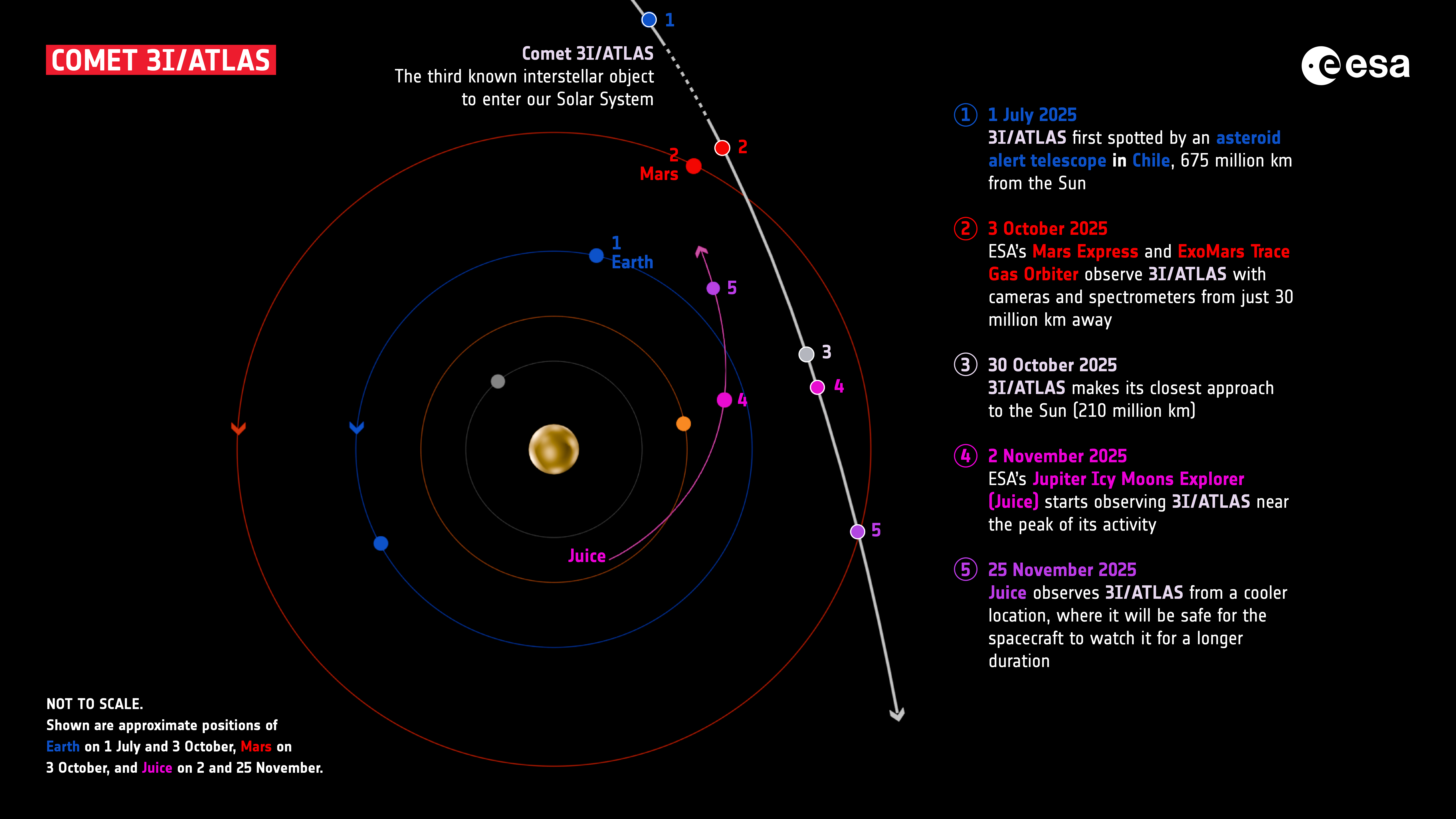
Mars Close Approach

Passes within 0.0179 AU of Mars orbit

Perihelion

Closest approach to Sun at 1.357 AU — peak observation window

Closest to Earth

Passes Earth at safe distance of 1.80 AU (269 million km)

Departure

Exits Solar System, returning to interstellar space forever

Featured Images

Stunning views from world's most powerful telescopes

View Gallery
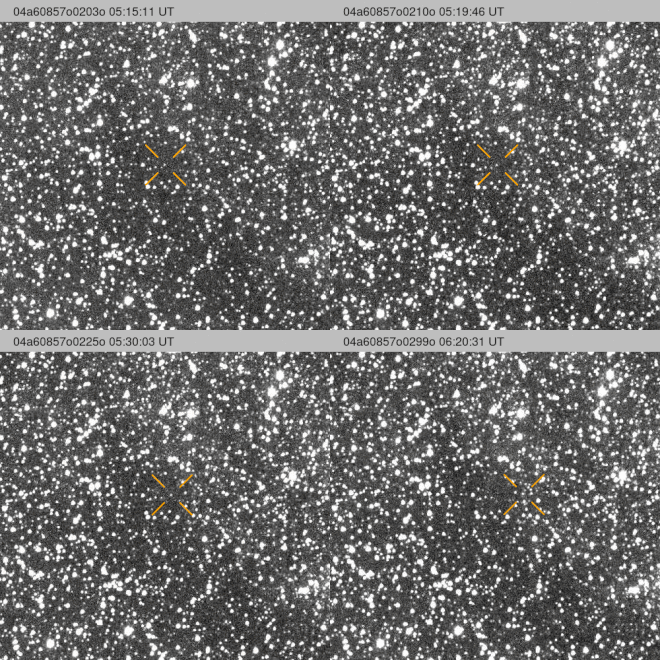
Discovery Animation

Discovery Animation

First detection sequence by ATLAS

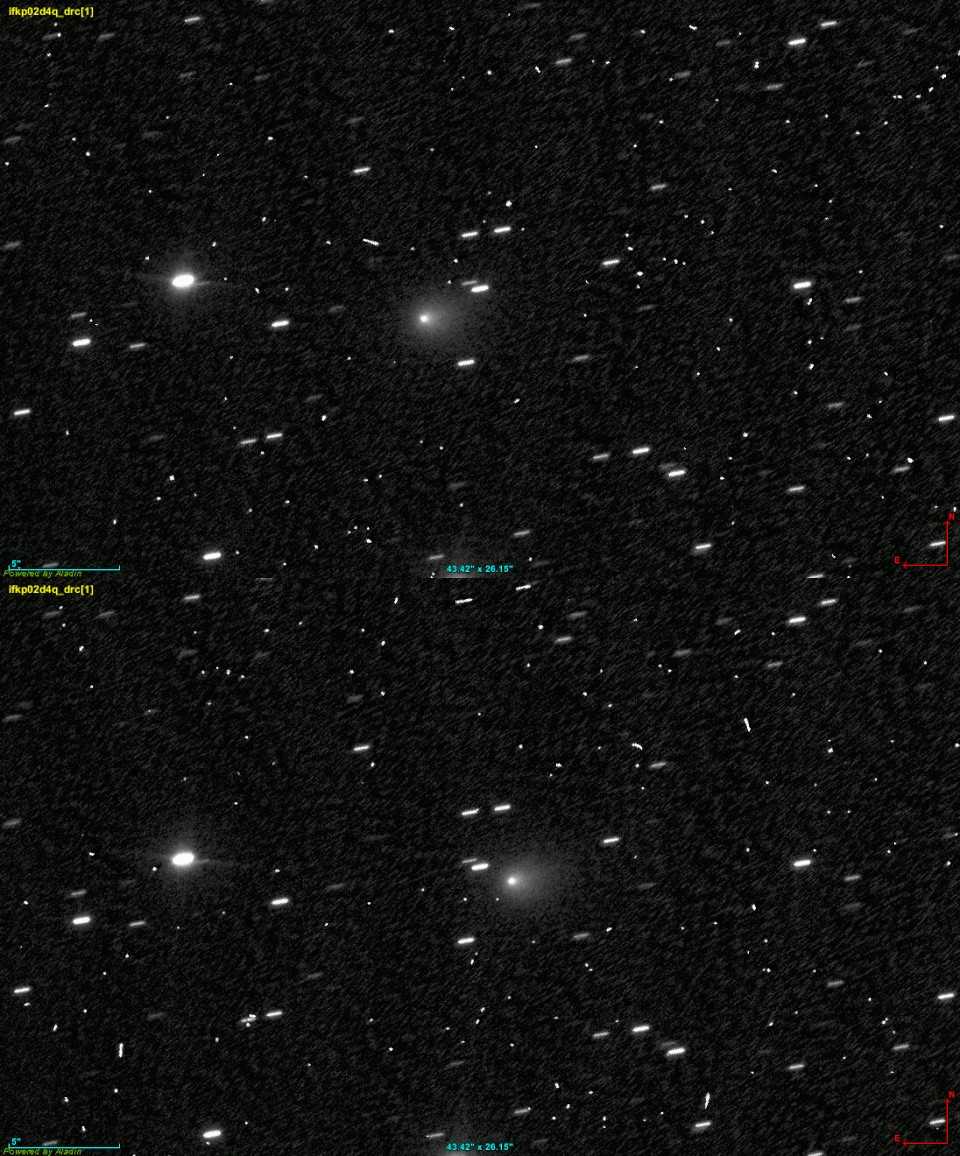
Hubble Animation

Hubble Time-lapse

Comet movement captured by HST

Gemini North

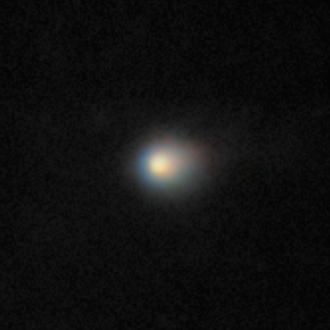
Gemini North Composite

Multi-band color imaging

The Alien Technology Debate

Scientific consensus vs. alternative hypotheses

Alternative Hypothesis

Harvard astronomer Avi Loeb proposed that 3I/ATLAS could potentially be an artificial probe from an extraterrestrial civilization, citing:

  • Unusual trajectory: Low retrograde orbital tilt allows access to planets with relative ease
  • Timing: Potential to reach Earth by late 2025 if maneuvering
  • "Dark Forest" hypothesis: Speculative scenario of potential hostile intent

Loeb described this as a "pedagogical exercise" to explore possibilities.

Scientific Consensus

NASA, ESA, and the astronomical community confirm 3I/ATLAS is a natural comet based on:

  • Outgassing detected: JWST confirmed CO₂, H₂O, and CO emissions
  • Cometary activity: Visible coma and tail formation from solar heating
  • Composition analysis: Chemistry matches Solar System comets
  • No threat to Earth: Closest approach is 269 million km away

Official Position

NASA and ESA state: "3I/ATLAS displays all classical signatures of cometary activity. The overwhelming evidence points to a natural interstellar comet, not artificial technology."

The object poses no danger to Earth and will continue past our planet at a safe distance before returning to interstellar space.